How to Clean an Oven Properly, Without Damaging It
Two methods that work, how to clean racks, door glass and seals, and the mistakes that damage ovens, including pyrolytic and catalytic ones.
At ELM Cleaning, the oven is part of every end of lease clean we do, and it is one of the items agents and property managers look at closely at a final inspection. It is also the job most people put off, because baked-on grease looks harder to shift than it is.
This guide covers what we would tell anyone cleaning their own oven: check what kind of oven you have first, pick a method that suits it, and avoid the few mistakes that cause real damage.
Before you start: check what kind of oven you have
Not every oven should be cleaned the same way. Find the manual (most are online if you search the brand and model number on the inside of the door frame) and check which of these you have:
- Standard enamel interior. The most common type. Both methods below work.
- Pyrolytic oven. It cleans itself by heating to a very high temperature and turning residue to ash. Follow the manual, remove the racks and trays before running the cycle, and wipe the ash out once it has cooled. Many manufacturers advise against commercial oven cleaner inside a pyrolytic oven.
- Catalytic liners. Rough, porous panels on the sides or back that absorb grease during normal cooking. Do not scrub them or spray cleaner on them, as that can ruin the coating. Clean around them and check the manual for how they should be maintained or replaced.
- Steam-clean function. Some ovens have a low-temperature steam setting that softens light grime before you wipe it out. It helps with light build-up but rarely shifts heavy grease on its own.
If you are renting, the oven is part of the property you hand back, so a quick look at the manual is worth it before you reach for anything strong.
What you will need
- Bicarb soda and white vinegar
- A spray bottle of water
- Dishwashing liquid
- A non-scratch scrubbing pad and a plastic scraper
- Microfibre cloths and an old towel
- Rubber gloves
- A commercial oven cleaner, only if you plan to use method 2
Method 1: bicarb soda paste (gentle, but slow)
This is the method we suggest for most people. It takes patience rather than effort.
- Take everything out. Remove the racks, trays and any thermometer, and set them aside for later.
- Make a paste. Mix bicarb soda with a little water until it spreads like thick cream.
- Coat the inside. Spread the paste over the base, sides and the inside of the door, avoiding the heating elements, the fan and any catalytic liners. Thicker paste on the worst spots.
- Leave it overnight. The paste needs time to soften baked-on grease. This is the step most people cut short.
- Wipe and scrape. Use a damp cloth and the plastic scraper to lift the paste and the grease with it. Rinse the cloth often.
- Spray with vinegar. Lightly mist any remaining white residue with white vinegar. It will fizz and loosen what is left.
- Final wipe. Go over everything with a clean, damp microfibre cloth, then leave the door open to dry.
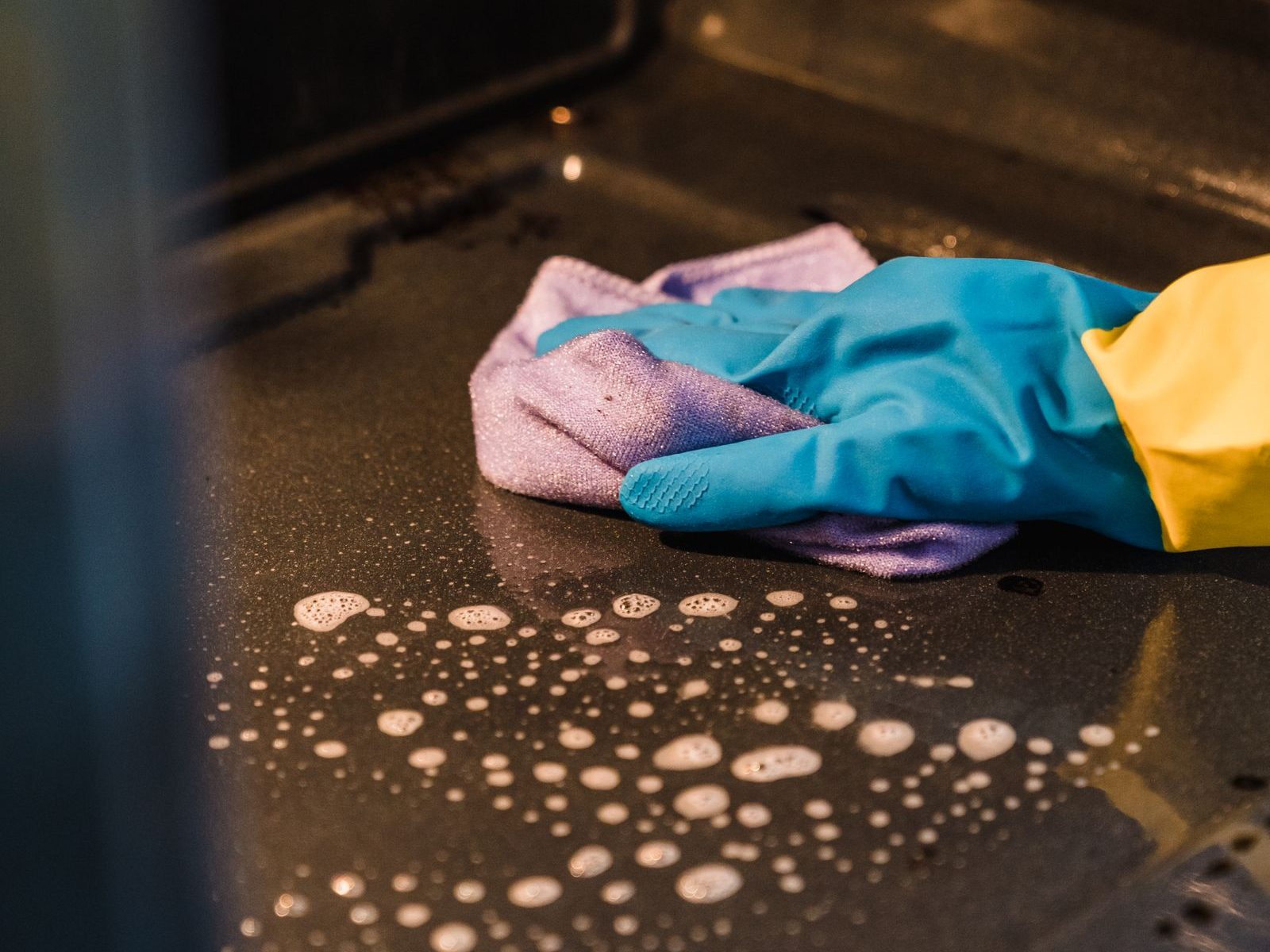
Method 2: commercial oven cleaner (faster, but stronger)
Commercial oven cleaners work quickly on heavy build-up, but they are strong products and need care.
- Read the label first and follow its directions and dwell time exactly.
- Ventilate the room, wear gloves, and protect your eyes.
- Keep children and pets out of the kitchen while you use it and until the room has aired.
- Keep it off the heating elements, the fan, the door seal and catalytic liners.
- Never mix it with any other cleaning product, especially anything containing bleach. Mixing cleaning chemicals can release harmful fumes.
- Rinse thoroughly with a damp cloth, several times, so no residue is left to burn off the next time you cook.
If anyone in the household has allergies or sensitivities, method 1 is the gentler choice.
Racks and trays
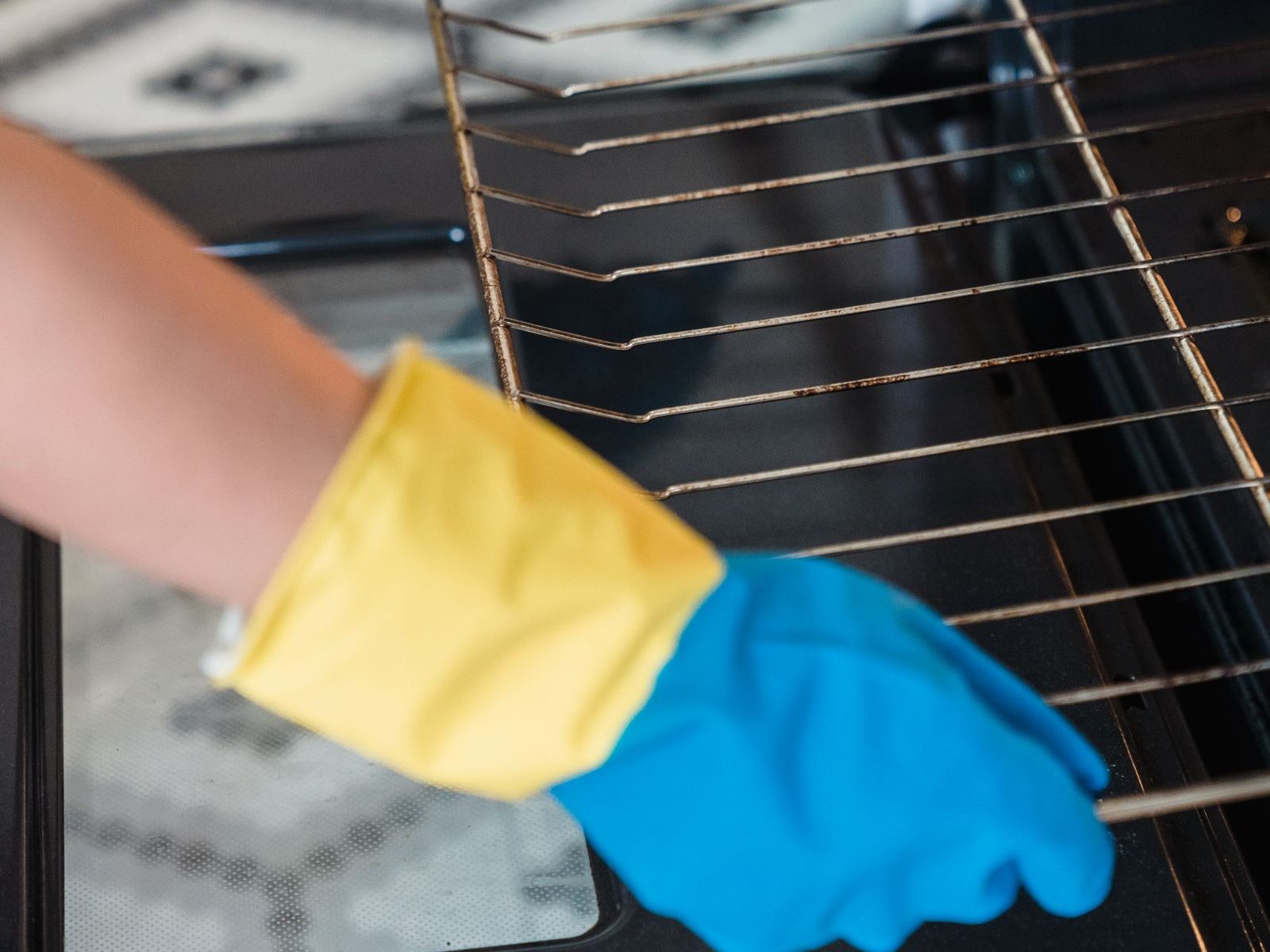
Racks are easiest to clean by soaking. Lay an old towel in the bottom of a laundry trough or bath to protect the surface, put the racks in, and cover them with hot water and a good squeeze of dishwashing liquid. Leave them to soak, then scrub with a non-scratch pad, rinse and dry. Trays can be soaked the same way, or coated with bicarb paste on the worst areas first.
The oven door glass
The door glass is what most people notice first, and it is often where brown, baked-on marks build up.
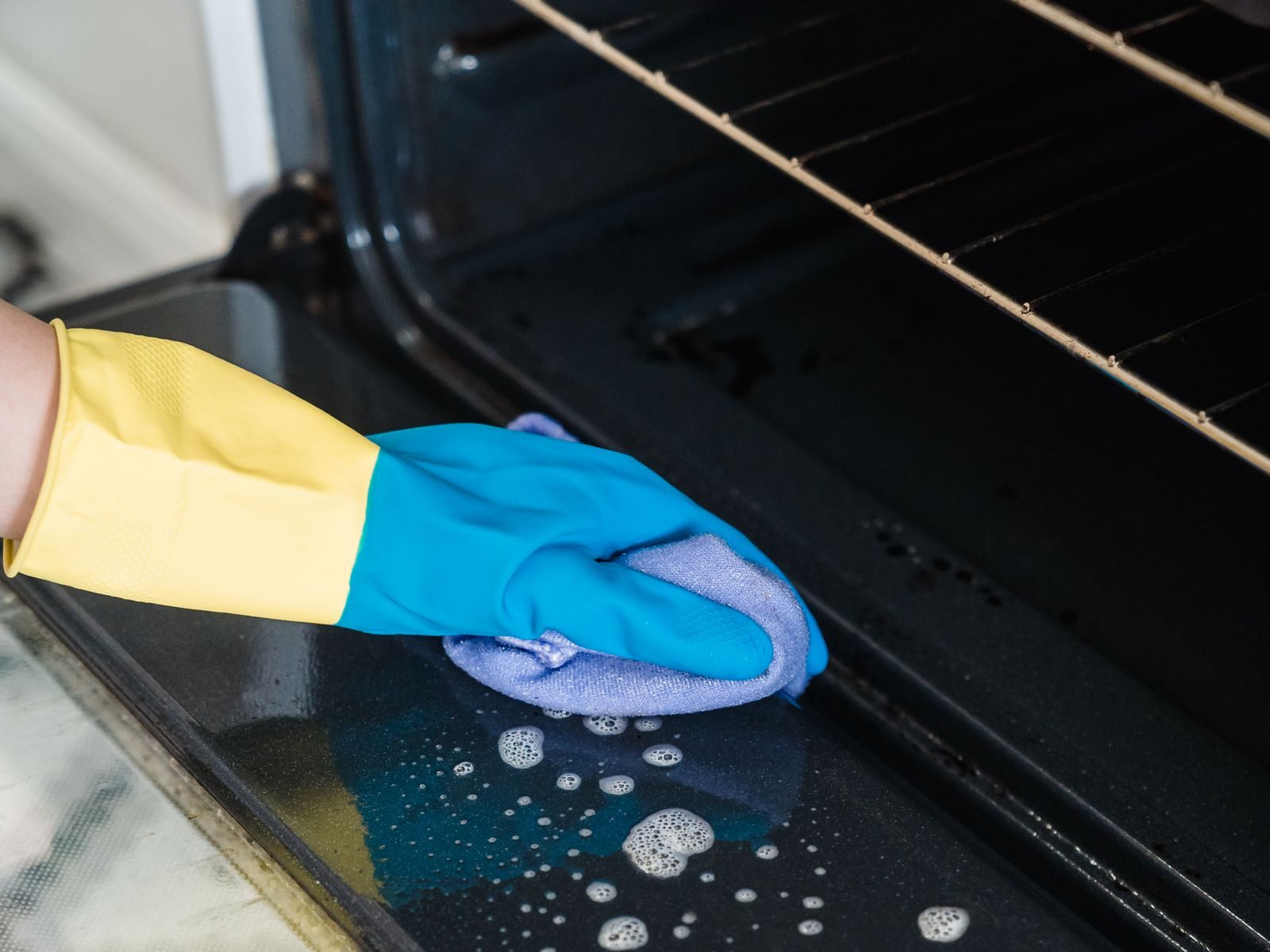
- Clean the inside of the glass with the bicarb paste and the plastic scraper, never a metal blade or steel wool, which can scratch it.
- Many oven doors let you remove the inner pane to clean between the layers of glass. Only do this if your manual explains how. Forcing the door apart can damage the hinges or the glass.
- Finish the outside of the door with a mild glass cleaner and a dry microfibre cloth.
The parts around the oven
A clean oven interior with a greasy rangehood still looks unfinished. While you are there:
- Door seal. Wipe it gently with warm, soapy water. Do not soak it or scrub it, as a damaged seal lets heat escape.
- Knobs and control panel. Wipe with a barely damp cloth. Do not spray liquid directly onto the controls.
- Rangehood filters. Metal mesh filters can usually be soaked in hot, soapy water, and some are dishwasher-safe. Check the rangehood manual. Our guide to what inspectors check at the end of a lease explains why the rangehood is so often missed.
- Cooktop. Clean it last, so any drips from the oven or rangehood do not undo the work.
Mistakes that damage ovens
- Scrubbing enamel or glass with steel wool or abrasive pads.
- Spraying cleaner onto the fan, heating elements or catalytic liners.
- Soaking or scrubbing the door seal.
- Mixing oven cleaner with other products.
- Running a pyrolytic cycle with the racks still inside, unless the manual says they can stay in.
When it makes sense to have it done
If you are moving out, the oven is one of the items an agent is most likely to raise. Every end of lease clean we do includes the oven interior, the racks and trays, and the exterior. It is not an extra.
If the oven is part of a bigger catch-up, our one-off deep clean includes the inside of the oven and the rangehood. On regular cleans, an oven deep clean can be added when it is needed. Our post on regular, deep and one-off cleaning explains the difference.
Our standard kit uses Australian-made, eco-friendly products, with no acidic or abrasive formulas. If any family members or pets have allergies or sensitivities, we check our products with you first.
End of lease cleaning across Melbourne
If you are cleaning an oven because you are moving out, these suburb pages cover end of lease cleaning in your area:
- End of lease cleaning Brighton
- End of lease cleaning St Kilda
- End of lease cleaning Carnegie
- End of lease cleaning Caulfield
- End of lease cleaning Glen Iris
- End of lease cleaning Malvern
- End of lease cleaning Hampton
- End of lease cleaning Richmond
Common questions about cleaning an oven
Can I use bicarb soda and vinegar in a pyrolytic oven?
Check the manual first. Most pyrolytic ovens are designed to be cleaned by their own cycle, after which you wipe out the ash. Some manufacturers allow a light wipe with mild products between cycles, but not commercial oven cleaner.
Is commercial oven cleaner safe to use at home?
It can be used safely if you follow the label exactly, ventilate the room, wear gloves and keep children and pets away until the room has aired. Never mix it with other products. If anyone in the household has allergies or sensitivities, the bicarb method is gentler.
How do I get brown stains off the oven door glass?
Coat the inside of the glass with bicarb paste, leave it to work, then lift it with a plastic scraper and a damp cloth. If the marks are between the panes, check whether your manual explains how to remove the inner glass before trying.
Is the oven included in an end of lease clean?
Yes. Every end of lease clean we do includes the oven interior, racks and trays, and the exterior. Your quote confirms the full scope for your property.
Will a clean oven get my bond back?
A clean oven helps, because it is one of the items an agent checks against the entry condition report. But a bond decision also depends on damage, wear and the lease itself, so no cleaner can promise an outcome. Our guide to what inspectors check covers the Victorian rules.
Do you clean ovens on a regular clean?
An oven deep clean can be added to a regular clean when it is needed. If the whole home needs a reset, a one-off deep clean includes the inside of the oven. You can request a quote and tell us what you need.

Cleaning vs Sanitising vs Disinfecting: A Melbourne Guide
A practical guide for Melbourne homes and workplaces explaining cleaning, sanitising, disinfecting, contact time, and when each process is relevant.
Registered or Unregistered: Choosing an NDIS Cleaning Provider
Which NDIS plans can choose an unregistered cleaning provider, the protections that still apply, what changed in 2026, and what to ask before your first clean.

Regular vs Deep vs One-Off Cleaning in Melbourne
A practical Melbourne guide to choosing regular, deep, or one-off cleaning based on your home's condition, priorities, and the result you need.